
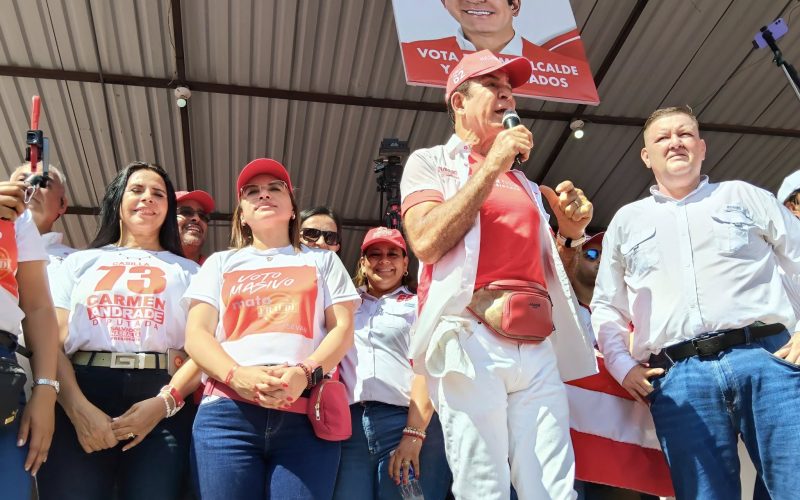
The Honduran electoral landscape remains highly competitive ahead of the November 30 election. Polls continue to position Salvador Nasralla and Nasry “Tito” Asfura as the main contenders, while the ruling party’s candidate, Rixi Moncada, lags behind in third place with no signs of a significant rebound.
Recent surveys indicate that both Nasralla and Asfura are attracting the attention of uncommitted voters, a group deemed crucial for influencing the ultimate result. Both contenders have increased their grassroots activities, emphasizing platforms centered on financial security, the anti-corruption effort, and administration, elements that the voting public appears to prioritize as the campaign nears its conclusion.
In contrast, Moncada’s performance shows a sustained decline. Analysts attribute this situation to the erosion of the ruling LIBRE party, criticism of its political platform, and growing citizen dissatisfaction with the government’s performance. “Moncada is entering the final phase of the campaign in a weakened position. Her electoral ceiling is evident, and there seems to be no room for significant growth,” said an independent political analyst. The latest polls place her more than fifteen points behind the two frontrunners, a gap considered difficult to overcome at this stage of the electoral process.
Voter preferences and economic orientation
Business, academic, and social spheres have noted that the electorate demonstrates a distinct preference for choices seen as centrist and investment-friendly, a pattern that has benefited both Nasralla and Asfura. The decision between these two contenders underscores a discussion about the economic and administrative objectives they will confront in the upcoming period. This division also emphasizes the significance of public involvement as a crucial element in the credibility of the election proceedings.
Polarization and international scrutiny
International observers highlight that Honduras is undergoing one of the most divided electoral processes in its modern history, where the engagement of voters will be crucial for guaranteeing the clarity and acceptance of the outcomes. The push for an educated vote is coupled with the concern of foreign entities regarding the nation’s political and economic steadiness, factors that might shape how election day is perceived.
The current scenario reflects a context in which the main contest is between Nasralla and Asfura, while Moncada faces an adverse outlook in terms of electoral positioning. The final stretch of the campaign is shaping up to be a critical period for consolidating support, defining territorial strategies, and ensuring the participation of key voters.
The competition underscores the inherent conflict between governance, the desire for steadiness, and the imperative for strong civic engagement. The choices made by uncommitted voters and how political factions address financial and societal difficulties will determine the nation’s trajectory for the upcoming period, within a framework where institutional credibility and electoral trust are still paramount concerns.
